
The blog.
Plain-English answers to the questions we get every day in Lower Mainland driveways. Written by working techs, not a content agency.

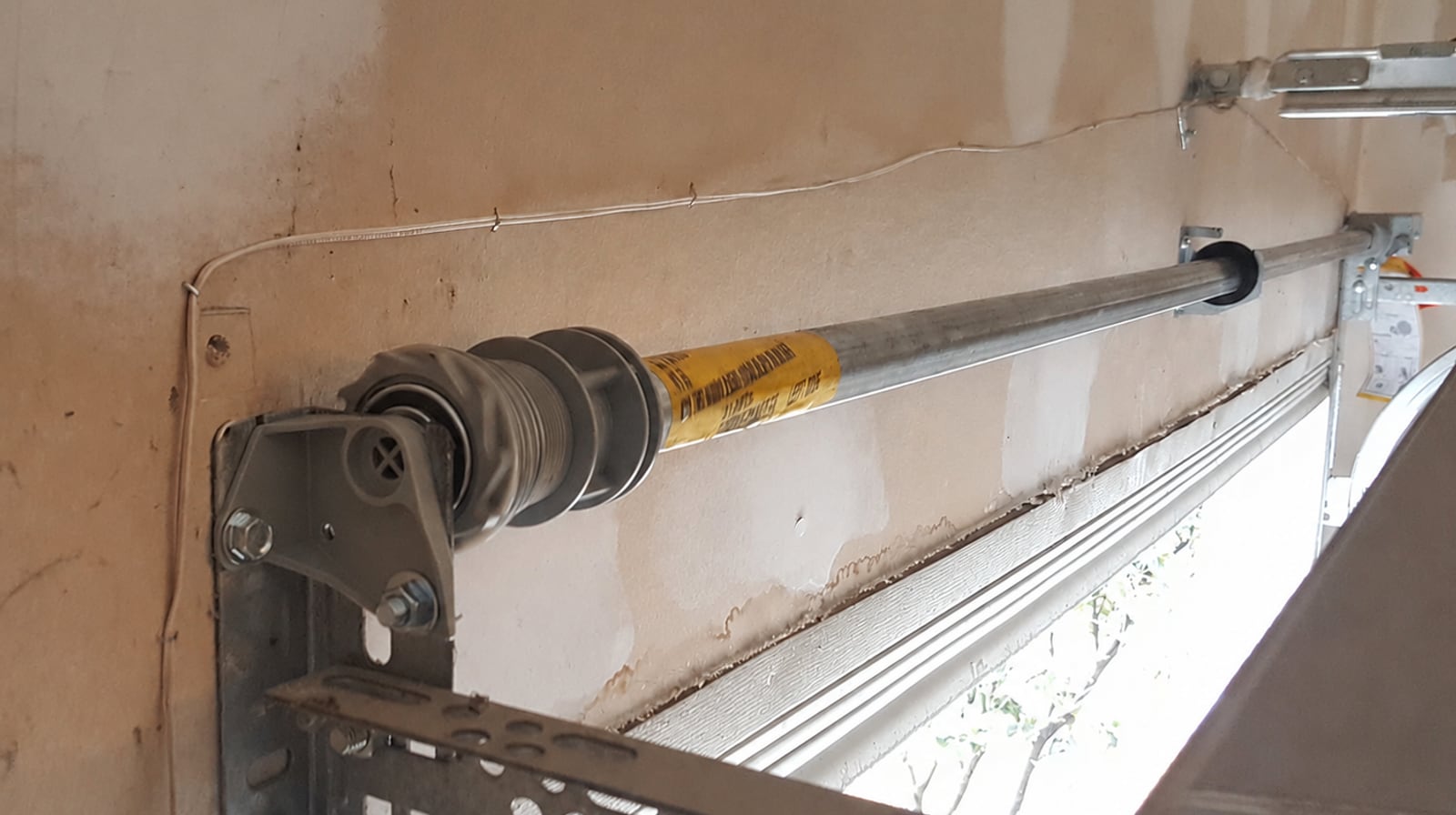
Terra Nova, Hamilton, and the slow sinking of Lulu Island — how delta silt and salt air kill TorqueMaster springs in Richmond.
Richmond sits at an average elevation of one metre above sea level. The City of Richmond's own planning documents project about 200 mm of land subsidence by 2100 — the delta silt is settling, the Fraser is still depositing sediment, the water table is high year-round. Your house …
Silver Valley and Albion — the TorqueMaster Plus generation hits year ten.
Silver Valley's area plan was adopted in 2002. Construction started in earnest about 2007 — the same year Wayne Dalton launched the TorqueMaster Plus. The two timelines lined up so precisely that almost every original-owner home in Bridle Ridge, Everwood, and McIvor Meadows is on…
Welcome to TorqueMaster country — Cloverdale, Clayton, and what 6,297 housing units in 2024 means for you.
Surrey built 6,297 new housing units in 2024 — the highest number in the city's history, $2.8 billion in construction value, despite high interest rates and labour shortages. Those are Mayor Locke's numbers, not ours. The reason they're relevant to a garage door spring company: e…
Why English Bluff TorqueMasters rust from the inside — Tsawwassen's salt-air spring problem.
Tsawwassen gets less rain than the rest of Metro Vancouver — it sits in the Olympic rain shadow and averages about 950 mm a year against Vancouver's 1,189. That's not the problem. The problem is what the wind carries. Constant onshore breeze off the Strait of Georgia drops salt a…
Walnut Grove's third-generation TorqueMaster — the cul-de-sac problem nobody warned you about.
Walnut Grove had its growth spurt because the Township overbuilt a sewage plant in the 1980s and needed homes to use it. By 1995 the cul-de-sacs north of 200th — 80B Avenue, 88 Avenue, the whole web around Walnut Grove Secondary — were filling in fast. Twenty thousand homes insid…
Westwood Plateau's TorqueMaster crisis — why a 1990s luxury showcase is calling us on Sunday afternoons.
Westwood Plateau was the showcase Coquitlam wanted in 1995 — built on the bones of the old Westwood Motorsport racetrack, anchored by a Robert Trent Jones golf course, marketed with the city's first "Street of Dreams" walkthrough. About 2,300 detached homes went up between 1991 a…

The 60-second balance test: pull the red cord, lift to 3 feet, watch what happens.
Your garage door is either balanced or it's lying to you. The good news is it'll tell you the truth in about a minute if you ask it right. The bad news is most people never ask, which is why I drive a Tacoma full of springs around Burnaby instead of working a normal job.

It's white lithium grease. It's not WD-40. I will die on this hill.
Once a quarter I get a call from someone in Burnaby Heights who has been faithfully spraying WD-40 on their garage door hinges since the Harper government, wondering why everything keeps seizing up. I have to explain, gently, that they have been actively un-lubricating their door for fifteen years. They are usually not pleased with this information.

Every November the door reverses for no reason. Here's the 30-second fix.
Every November, around the time the fog comes up off the Fraser and sits on Lulu Island for three weeks straight, my phone starts ringing with the same story. "The door closed fine all summer and now it won't." I love this call, because I get to tell people they don't need me — they need a damp paper towel and thirty seconds.

Please don't replace your own torsion spring. I will help you understand why.
I get a call about once every two months that starts with the words "so I tried to do it myself." I have never once heard that sentence end well. The garage door spring is the single most dangerous piece of stored energy in a typical Canadian house, and there is no honour in losing a finger over $400.
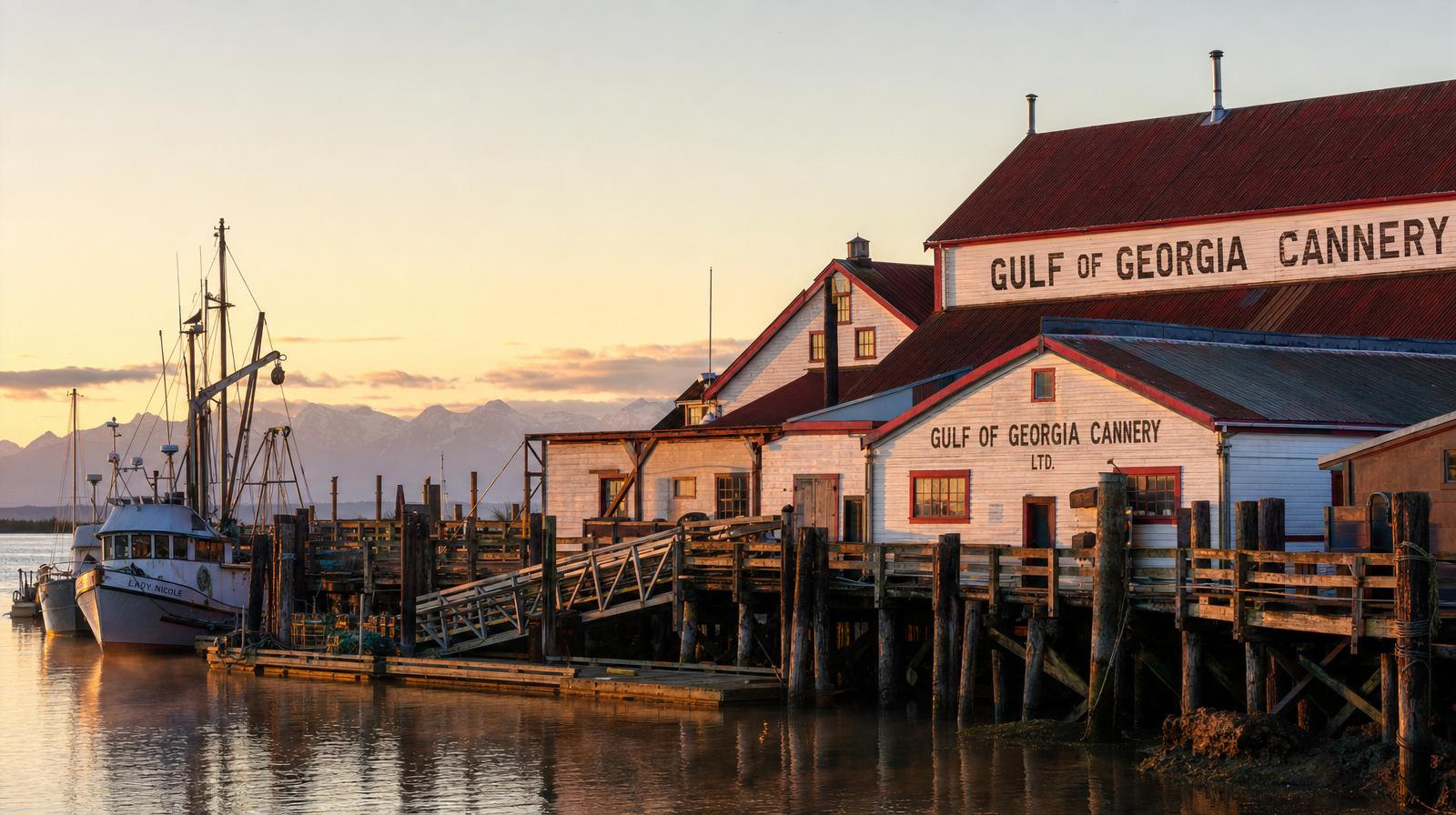
The Massey Tunnel and your spring job: a candid map of South Arm response times.
Every Delta, Tsawwassen, and South Surrey customer I've had since 2009 has asked me the same thing in the first ninety seconds of the call: "Where are you coming from?" The reason they ask is the Massey Tunnel, and the reason the Massey Tunnel is the question is that we have been talking about replacing it for longer than most of my customers have lived here.
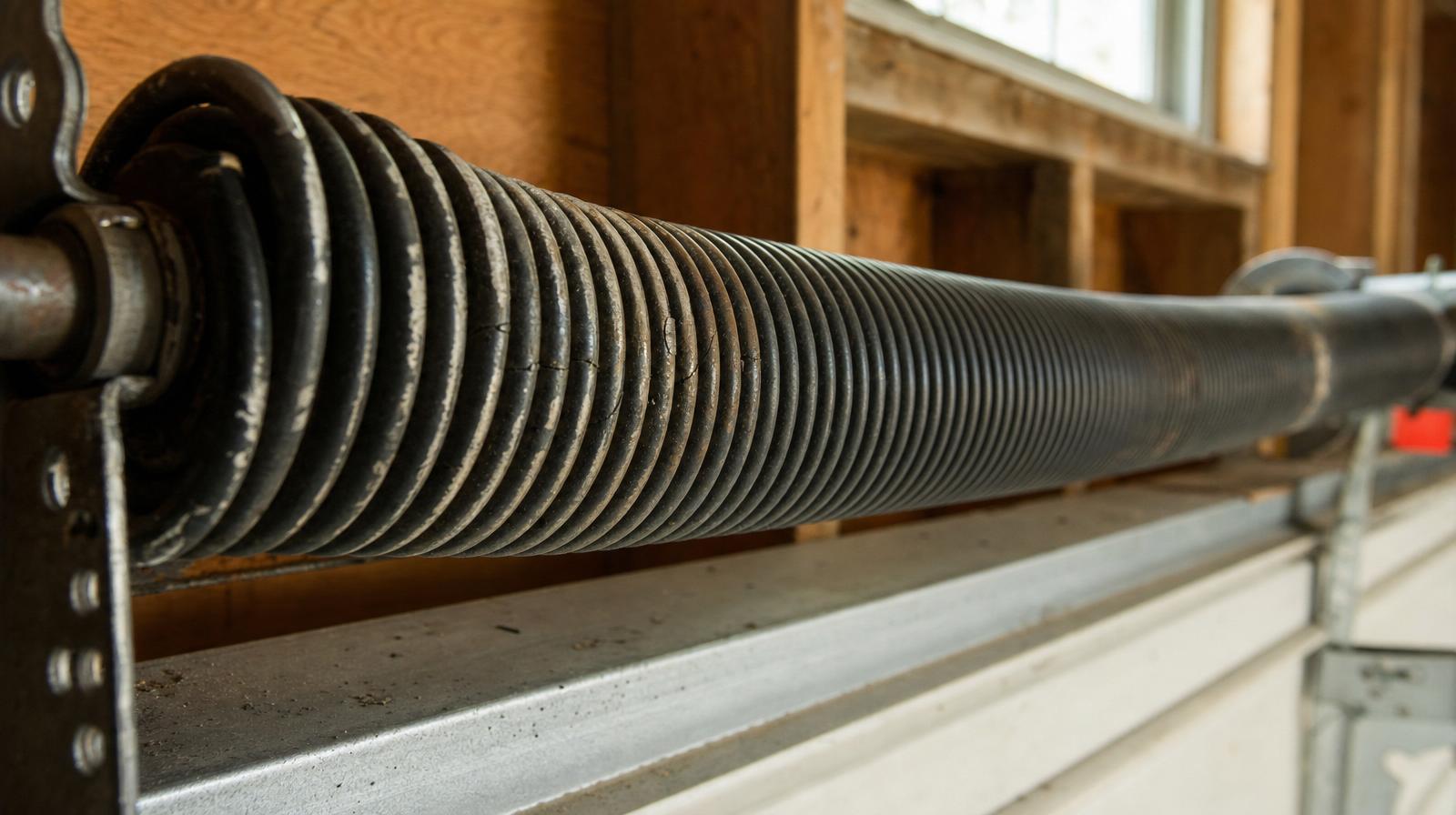
The Olympic legacy: why 28,000 condo doors are failing right now.
Sometime in late 2009, a procurement officer for one of the big Vancouver condo developers signed off on roughly 28,000 builder-spec garage doors, mostly from two manufacturers, with the cheapest legal-spec springs in them. That was sixteen years ago. The math says those springs are now failing on schedule. I am writing this from the passenger seat of the Tacoma between calls. They are failing on schedule.
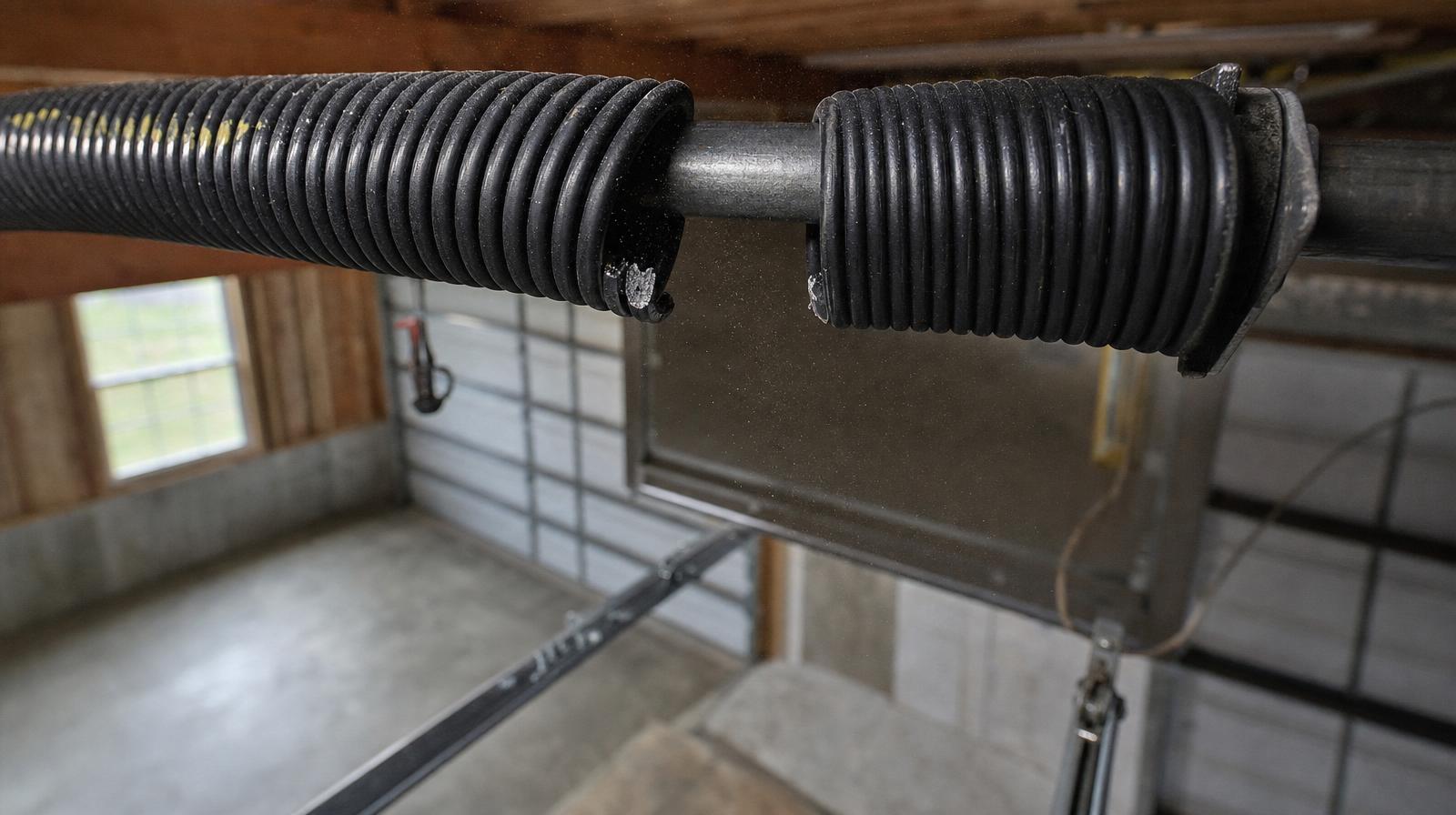
What the Big One means for your garage door (and whether to actually worry).
Every couple of years a fresh CBC article reminds us that we live on top of a magnitude-9 subduction zone that goes off, on average, every 500 years, and that the last one was January 26, 1700. I get a small uptick in calls for about a week after every one of these articles. They mostly start with "so I was reading about the Big One and I was thinking about my garage door." Fair enough. Let me tell you what the geology actually means for your hardware.
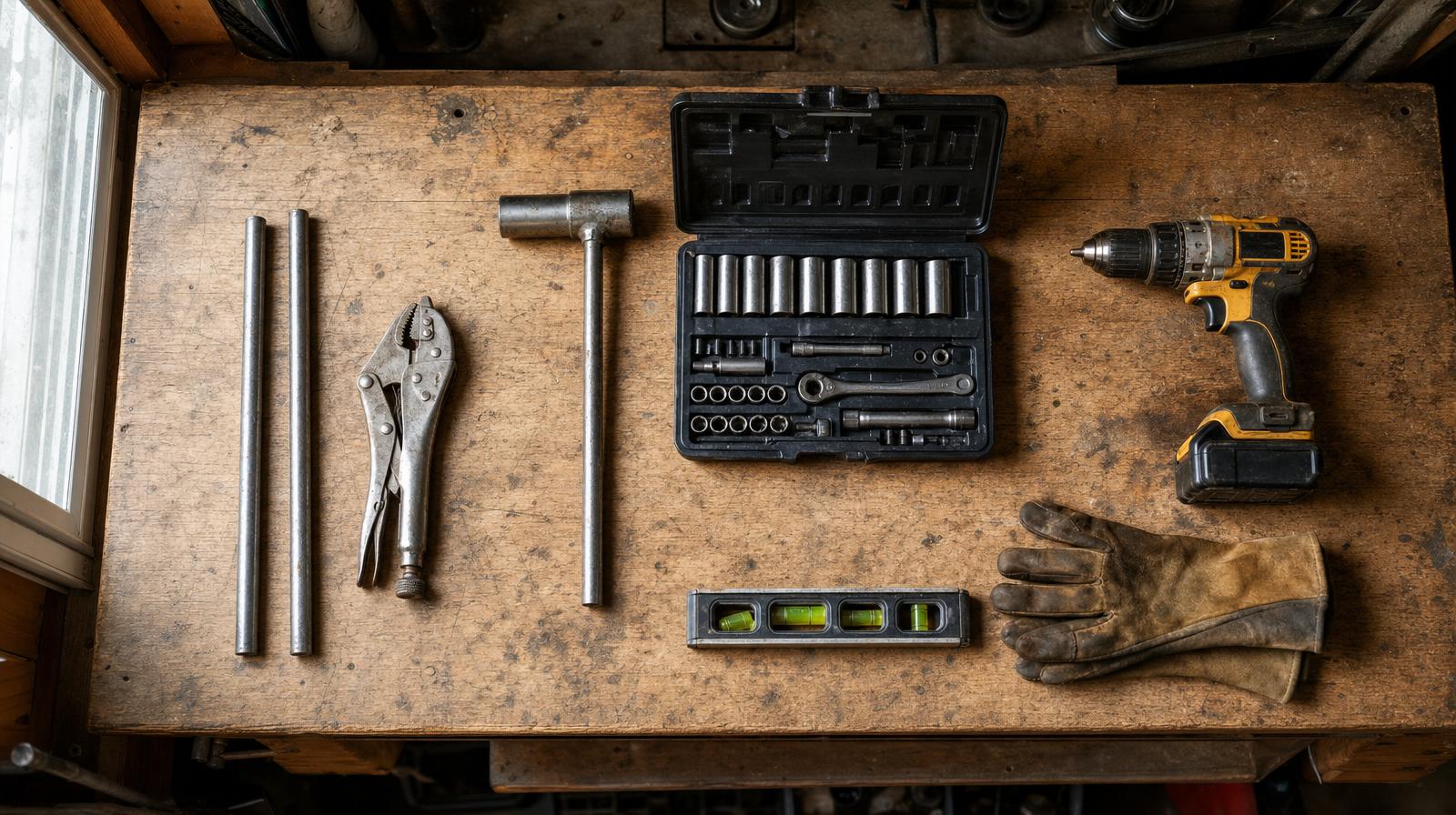
Ten questions every strata council should ask a garage door contractor.
I get asked to bid on strata maintenance contracts a few times a quarter. About a third of the time, the council that's putting it out for bid has been burned before. The other two-thirds are about to be. Strata garage doors are not single-family garage doors with extra paperwork — they're a different animal, and most contractors will quietly pretend otherwise. Here are the ten questions that filter out the pretenders.
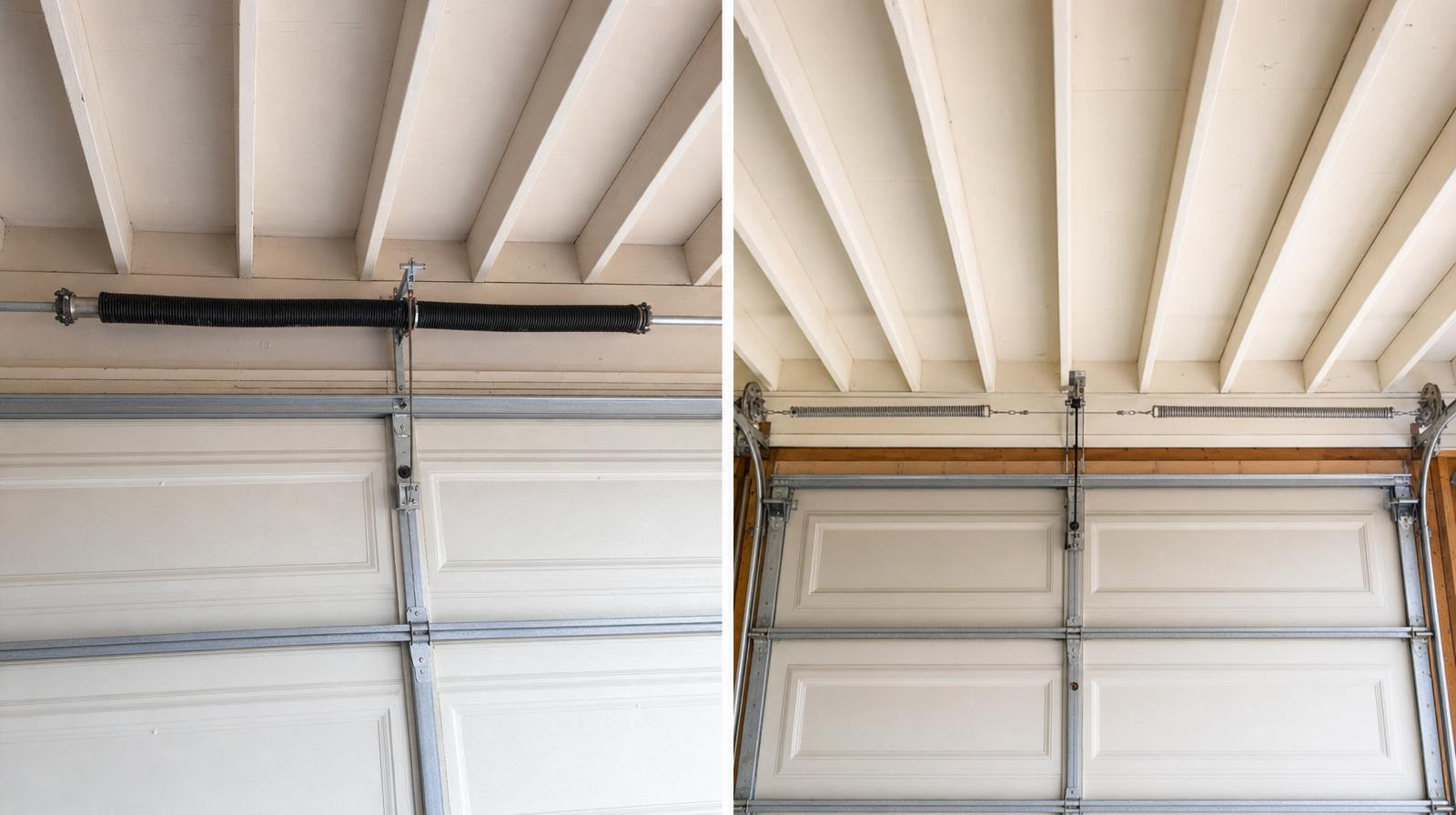
From Shaughnessy carriage doors to East Van laneway homes: a 100-year garage tour.
Most of what we do is replace a spring. But once a week or so, I'll get a call from a Shaughnessy heritage property or a brand-new Mount Pleasant laneway house, and the work is a window into a hundred years of how the Lower Mainland decided what a garage was supposed to look like. The architecture changed. The salt didn't. Let me walk you through it.
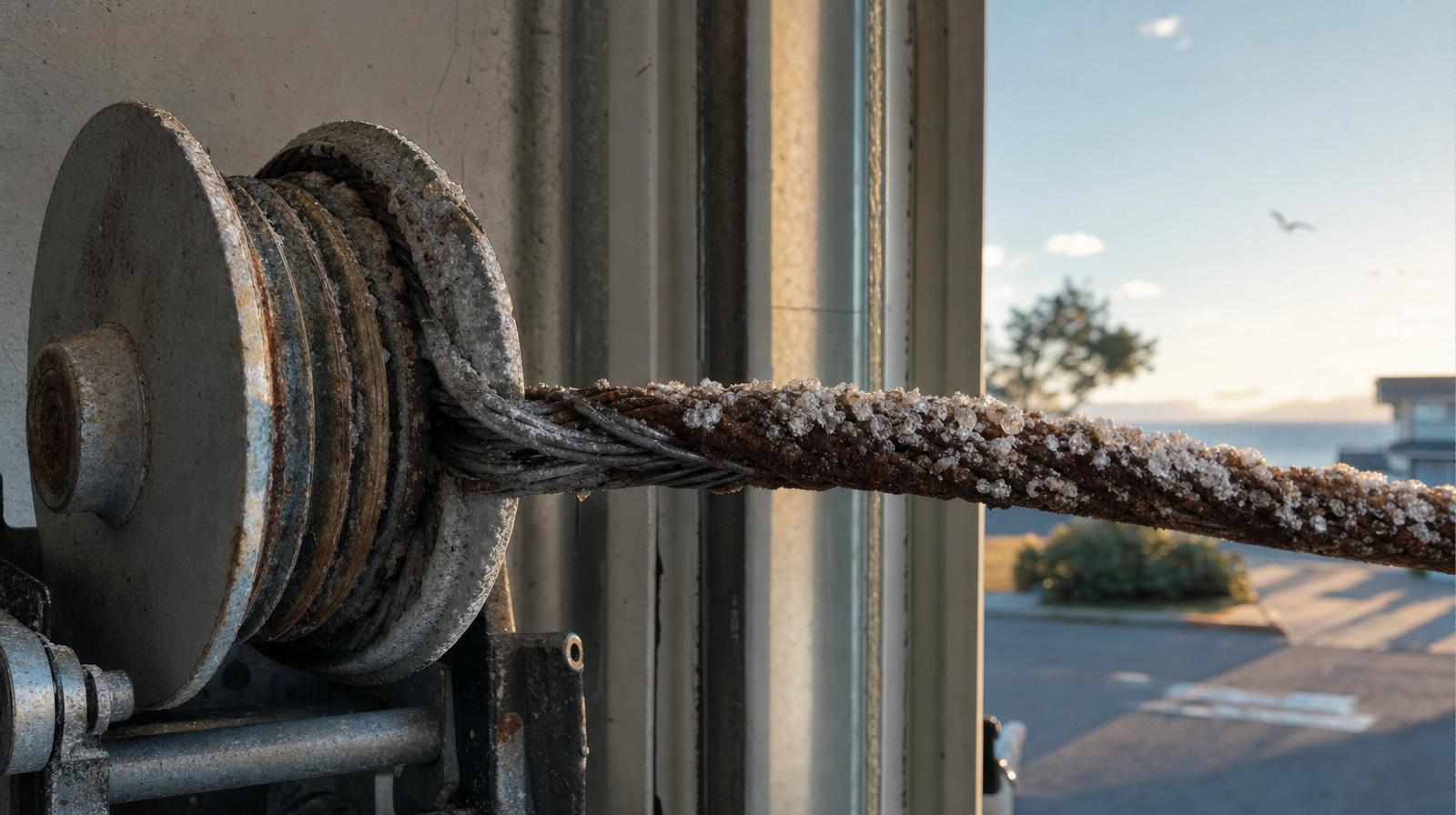
Atmospheric rivers, the November cable problem, and what 2021 taught us.
November 14, 2021 — the Sumas Prairie went underwater, the Coquihalla closed, and somewhere in the chaos, my phone started ringing off the hook with a very specific complaint. "The door is making a weird noise." I worked sixteen days straight that month. Almost every call was a cable. The atmospheric river taught us something we'd half-known for years: it's not the cold that gets you, it's the rain.
Heard a loud bang from the garage? Yeah, that was your spring.
It's 6:47 a.m. and you hear what sounded exactly like a gunshot from your garage. Then nothing. Just the dog losing his mind and you in slippers. Here's what just happened — and what to do in the next 10 minutes.
Torsion vs. extension springs — which one is on your door?
Look at your garage door. If there's a big horizontal coil above the door, that's torsion. If there are two long springs stretching along the tracks on either side, that's extension. Why it matters (and why extension is going away).
How long do garage door springs really last in Vancouver?
The label says 10,000 cycles. The honest answer for a Lower Mainland home is 5 to 10 years for standard, 12 to 18 for high-cycle. Here's what shortens it (and what doesn't).
Wayne Dalton TorqueMaster — yes, we fix these. Here's why we convert.
If your door has a sealed steel tube above it instead of a visible coil, you have a TorqueMaster. Original parts are discontinued. TorqueMaster Plus has plastic gears that fail. The conversion path is almost always the right move.
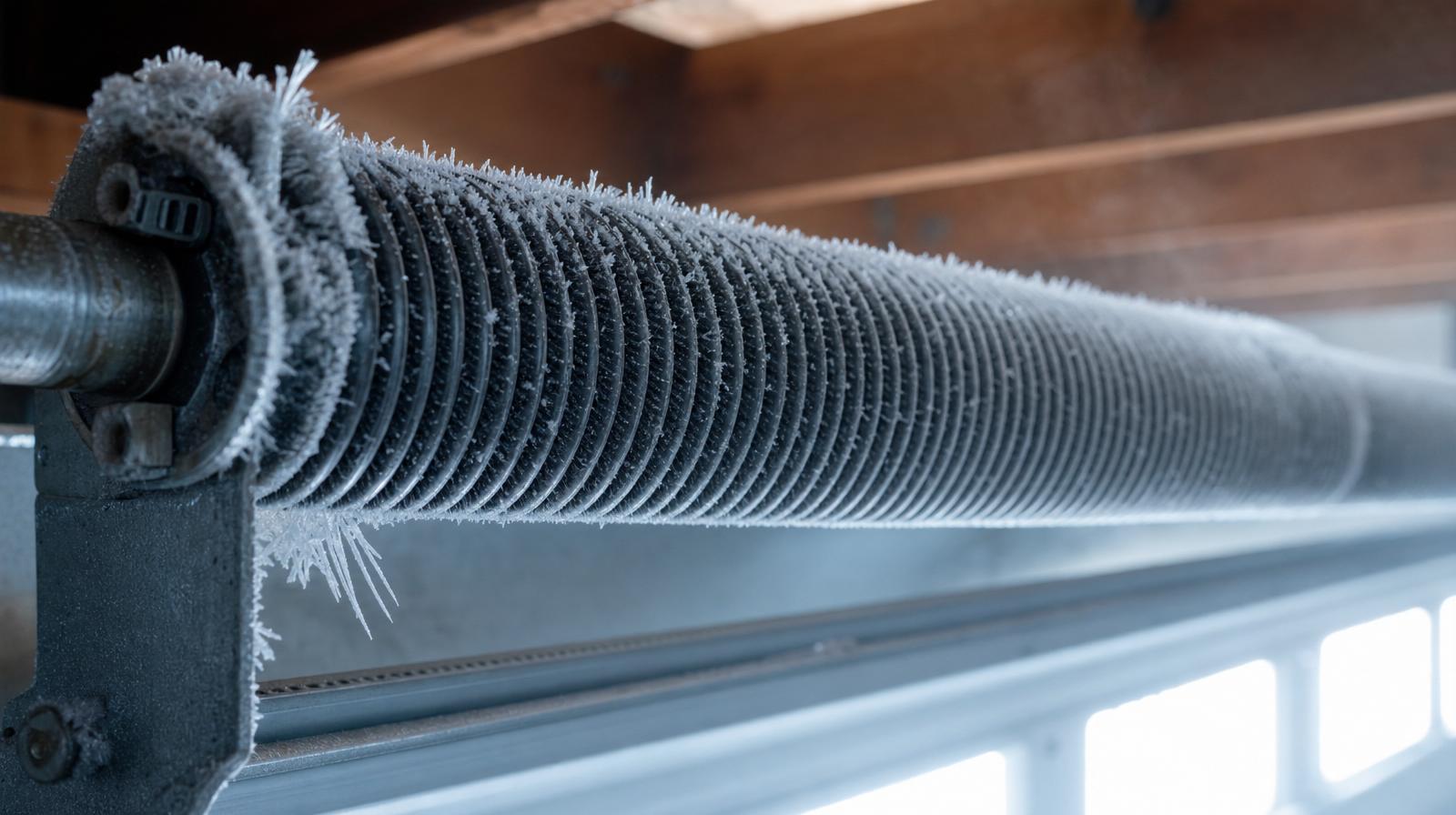
Why cold snaps break garage door springs — even mild Vancouver ones.
You don't need -20°C. Steel gets brittle around freezing, and our call volume doubles for 3–5 days after every drop below 0°C. Here's the metallurgy in 4 paragraphs.
Why coastal garage door springs fail early.
Three generations on Lulu Island. If your spring or cables failed in under seven years and you live near the water — Tsawwassen, Steveston, oceanfront White Rock — it's almost always salt. The cables go first.
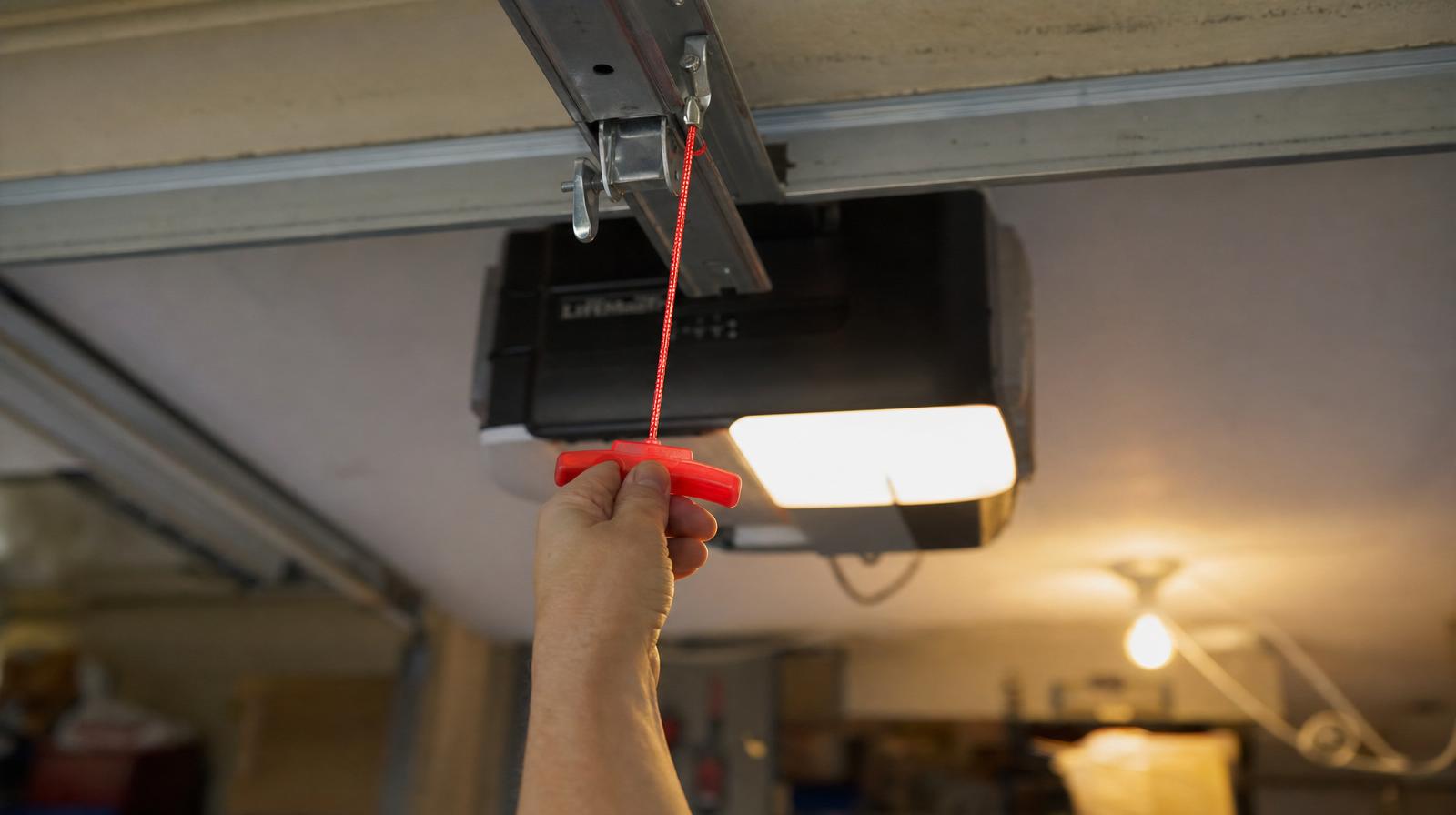
Opener won't lift the door — is it the opener or the spring?
Same symptom, two completely different fixes. A 30-second test tells you which one. Disconnect the motor, lift the door by hand — if it's heavy, it's the spring. If it's light, it's the opener.
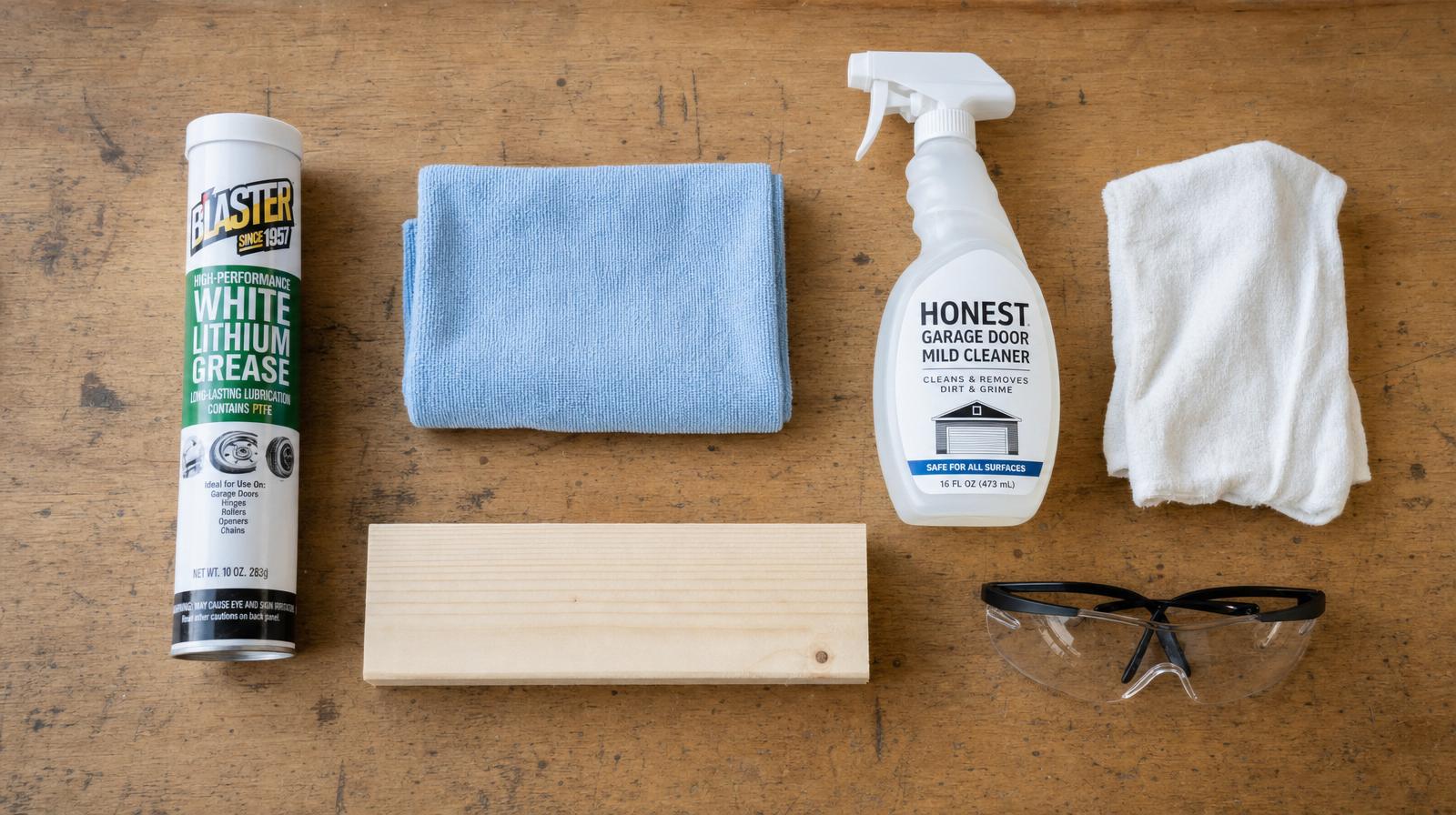
4 DIY maintenance tasks that won't kill you. And 3 that might.
Lubrication, balance testing, photo-eye cleaning, auto-reverse check — go for it. Winding torsion springs, replacing cables under load, standing under a stuck door — leave it. Here's the line, drawn by working techs.
Three generations on Lulu Island.
My grandfather worked on the boats. My father worked on the roofs. I work on the doors. Same island, same families, same Fraser River air. The houses change, the salt doesn't.
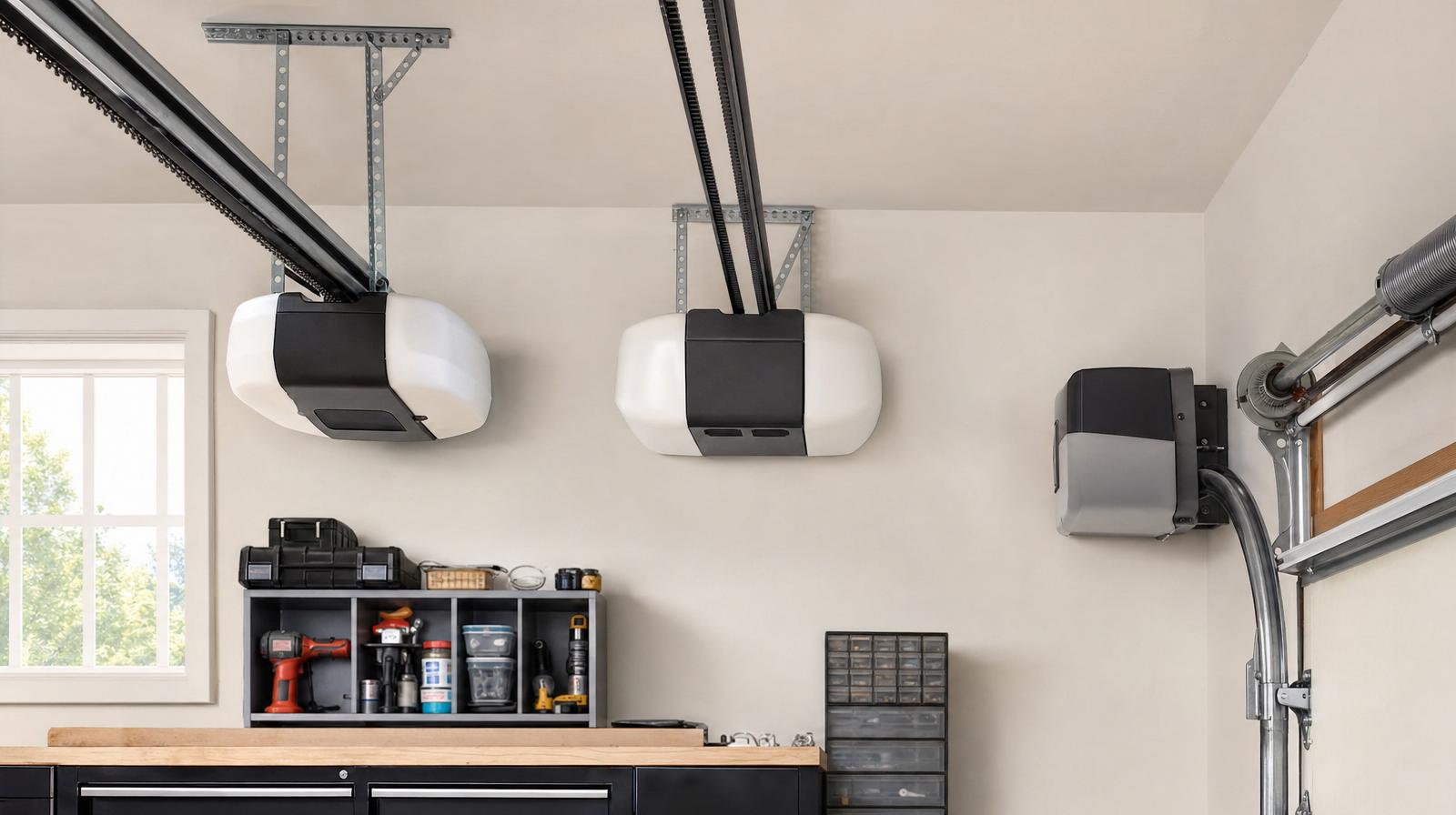
Openers we'd buy. If we sold them.
We don't sell openers. We don't install them. But we see hundreds a year. The short list: LiftMaster Elite, Genie StealthDrive, Hörmann SupraMatic — and what to avoid.
Why we don't sell new garage doors.
Most garage-door companies push new doors hard — it's where the margin lives. We don't. Here's the honest math behind specializing in one job and how to spot the upsell when it comes.