
People call us with one of two stories. "My opener is broken — it won't lift the door." Or "My garage door won't open — I think the opener died." Maybe one in three of those is actually the opener. The rest are springs.
Here's how to tell which one you've got before you spend money on the wrong repair.
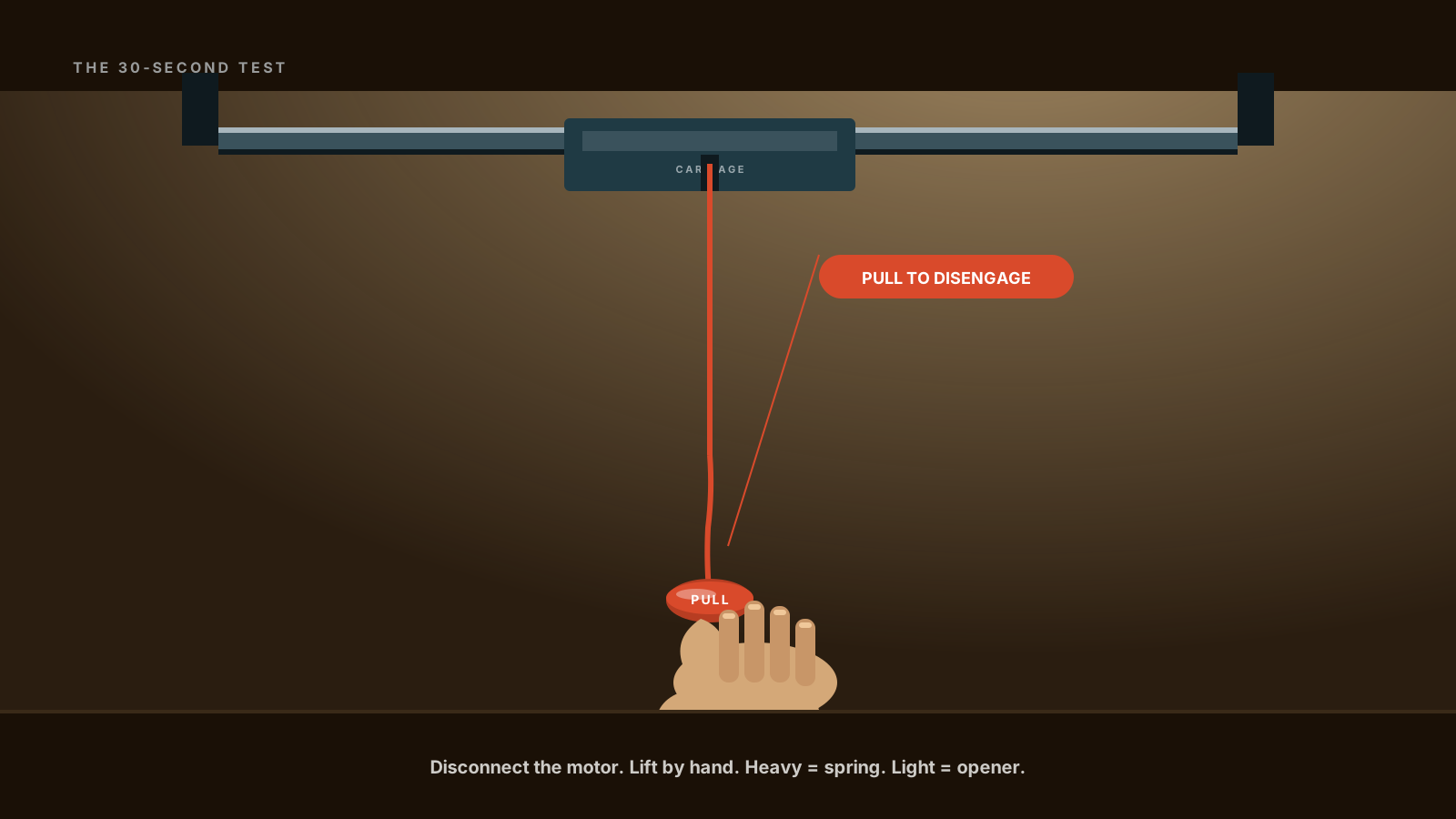
The 30-second balance test
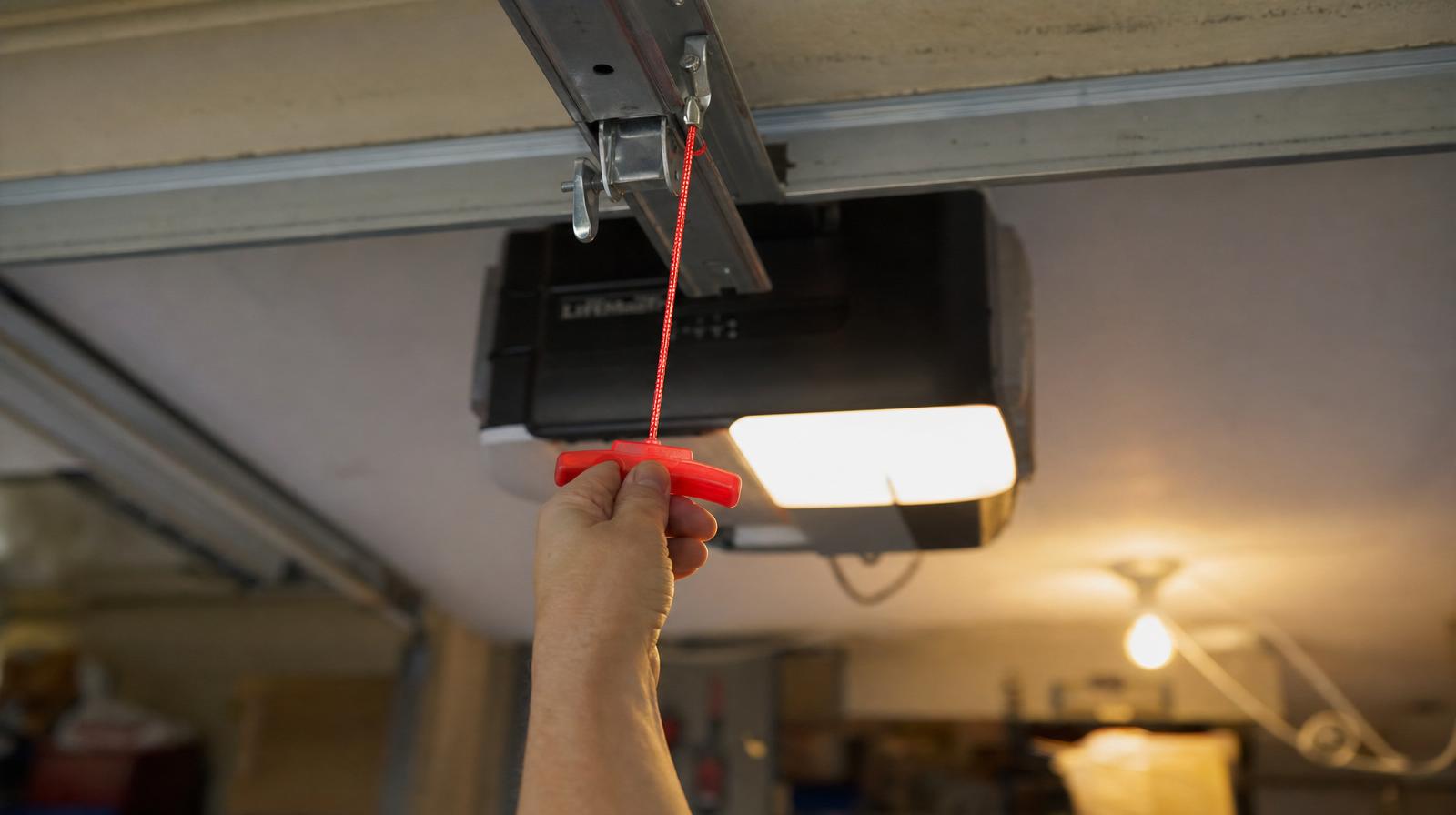
- Pull the red emergency-release cord hanging from the opener carriage (the rail above the door). It disengages the motor from the door. The door is now free.
- Stand at the bottom of the door with both hands on the bottom panel. Lift slowly. Stop at about 3 feet.
- Now interpret:
- If the door is heavy (you're putting more than maybe 30 pounds of effort in to keep it moving) — the spring has failed. The opener is fine. It just couldn't lift the door alone because that's not its job.
- If the door is light and lifts smoothly — the spring is doing its job. The problem is the opener. Could be the motor, the gear, the logic board, or a sensor.
- If the door is wildly unbalanced (heavy on one side, drifts up or down on its own) — one of two springs has snapped or the tracks are misaligned. Same family of problem; we handle both.
What "opener broken" looks like
Opener problems usually announce themselves with a sound or a behaviour:
- Motor hums but nothing moves — capacitor or gear, usually.
- Door reverses before it touches the ground — photo-eye sensor needs alignment or cleaning, or the down-force is set wrong.
- Remote works but wall button doesn't (or vice versa) — wiring or logic board.
- Everything dead, no lights, no sound — power, the breaker, or the unit is fried.
We don't fix openers. We do springs. But the balance test tells you fast whether you need us or somebody else, so you don't waste a service call.
What "spring broken" looks like
Almost always one of these:
- Loud bang at some point in the past 24 hours — torsion spring snapped. More on this here.
- Visible 1- to 2-inch gap in the spring coil above the door — diagnostic confirmed.
- Opener strains and stops partway up — motor is hitting the safety force limit because the spring isn't doing its share of the work.
- Door is heavy in your hand when you lift it manually — the test above.
If two of those four are true, it's a spring. Call us, save the call to the opener guy.
Edge case: opener strained for months, then died
This is the worst-case scenario. The spring weakened gradually. The opener kept compensating — straining a little more each cycle. Eventually the opener gear stripped because it was being asked to lift more weight than it was designed for. Now you have two problems: a dead spring and a dead opener.
If you've heard the opener straining for the last few weeks and now it won't move at all, that's probably what happened. Honest answer: replace both. We handle the spring; we'll refer you for the opener.
Cost realism
Spring repair (us): flat-rate, all-in — three tiers, quoted upfront.
Opener gear replacement (not us): typically $200–$400 if just the gear; $400–$800 for a full motor replacement; $500–$1,200 for a new opener unit installed.
New door (also not us): $1,200–$3,500+ depending on style and material.
The balance test takes 30 seconds and saves you from picking the wrong vendor.
If it's the opener, we'll tell you and step out. We don't sell anything we don't fix.
Call (778) 800-0769