
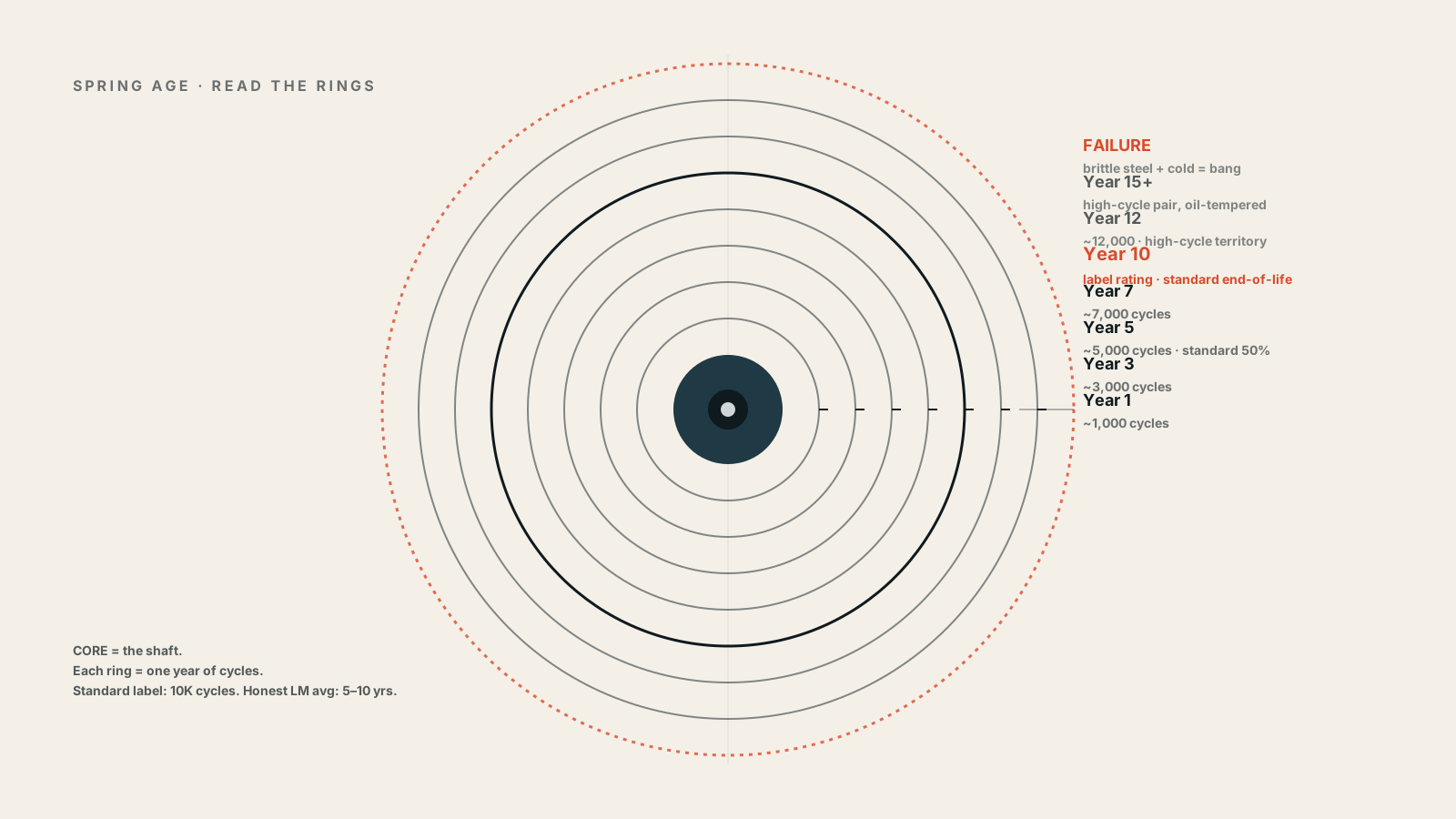
A "cycle" is one open + one close. Standard residential springs are rated at 10,000 cycles. High-cycle springs are typically 20,000 or 25,000.
So how many cycles do you actually do?
The math nobody does
A two-car household in Greater Vancouver opens the garage door roughly 3 to 6 times per day:
- Out for work in the morning. (1 open + 1 close = 2 cycles? No — one cycle.)
- Home from work. (1 cycle.)
- Out to pick up kids / groceries / dinner. (1 cycle.)
- Home again. (1 cycle.)
- Trash, recycling, evening errand. (1 cycle.)
Call it 4 cycles a day, average. That's 1,460 cycles a year. Standard 10,000-cycle springs hit their rated life around year 7.
Year 7 is the rough Vancouver average for first failure. Some last 5, some last 12. The variance comes down to climate, install quality, and how often you actually use the door.
What shortens spring life
Cold weather
Steel gets brittle below 0°C. Even mild Vancouver cold snaps spike our call volume — see the cold-weather post for the metallurgy. The number of below-zero mornings in your area predicts spring fatigue better than calendar age.
Salt air
If you're in Richmond, Tsawwassen, White Rock, Steveston, or oceanfront West Van / North Van, salt corrodes hardware faster. Galvanized springs and standard cables don't survive 10 years in those environments. Oil-tempered or stainless is the only honest spec on the coast.
Humidity
The North Shore (1,800–2,500 mm of rain a year) and the Fraser delta (Ladner, Pitt Meadows) age cables faster. Springs themselves are more weather-resistant, but the cables that work alongside them aren't.
Cycle-heavy households
If you have 3 cars, teenagers, a home gym in the garage, or you use the garage door as your primary entry, you're easily at 8 to 12 cycles a day. That cuts standard spring life in half. High-cycle is the right call.
Cheap original springs
Builder-grade installs in 2010-era townhouse complexes (Willoughby, Albion, South Bonson) often used minimum-spec galvanized springs rated exactly at 10,000 cycles. Most of those are at end of life right now.
What doesn't shorten spring life (much)
- Slamming the door. The auto-reverse and the soft-close are designed for this. Don't worry about it.
- Leaving the door open in the rain. Annoying, but not a spring killer.
- Heavy snow on the roof. The door doesn't carry that load.
- Lubricating "wrong." Use white lithium grease on hinges, rollers, and bearings. Don't use WD-40 (it's a degreaser). Don't grease the tracks (they should stay dry). But getting this perfect isn't the difference between 5 years and 10.
How to predict your spring's remaining life
Three quick checks:
- Disconnect the opener (pull the red cord) and manually lift the door to about 4 feet. Let go. The door should stay roughly in place, maybe drift slowly. If it drops fast or shoots up, balance is off — usually a tired spring.
- Listen during a normal cycle. Healthy springs are quiet. Clicking, groaning, or popping = stress.
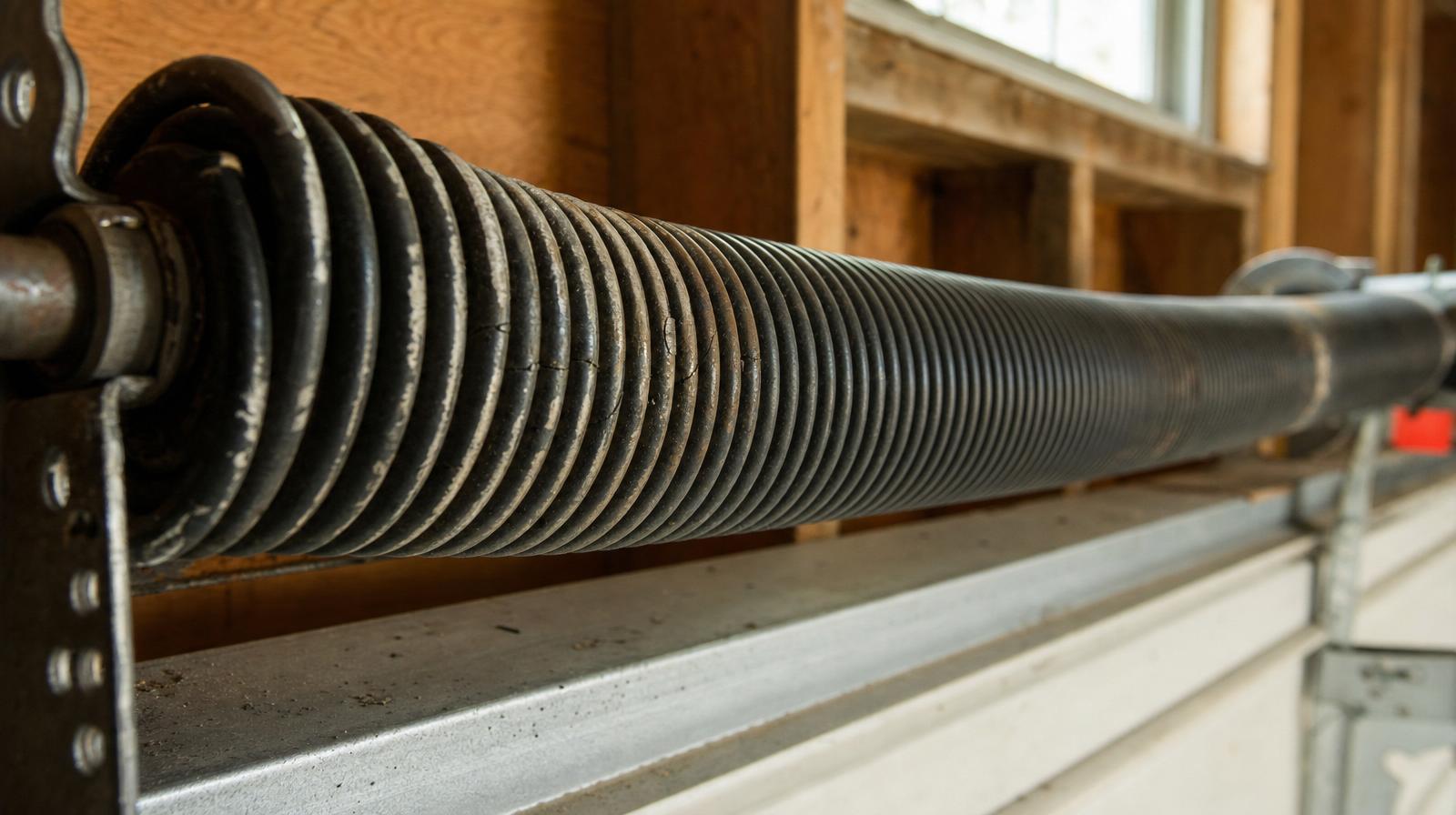
- Look at the spring coil under good light. Cracks, rust on the coil itself, or a slight gap = imminent failure.
If two of those three are off, you have weeks or months, not years.
Standard vs. high-cycle: which makes financial sense?
If you're staying in the house 5 years or less: standard. The math works out the same; you won't get the value out of the high-cycle premium.
If you're staying 10+ years: high-cycle, almost always. The high-cycle upgrade gives you 2.5× the cycle life, sealed bearings (no annual lubrication), and a 7-year parts warranty. Over 15 years that's one spring job instead of two.
If you're on Burke Mountain, Westwood Plateau, Heritage Mountain, or Burnaby Mountain: high-cycle anyway, for the cold tolerance.
Three flat-rate tiers, same price 7 a.m. or 9 p.m., your local tech ~12 minutes away.
Call (778) 800-0769