

I want to do this one carefully, because the YouTube algorithm is not on my side. There are thousands of garage door spring DIY videos, most of them by guys who got lucky once and decided that meant they had a system. The system is luck. The math is brutal.
I'm going to give you real numbers, real injury data, and the actual list of tools and skills needed to do this safely. By the end you can decide for yourself. I just don't want you to decide based on the version of this story where it went well.
What's actually under tension
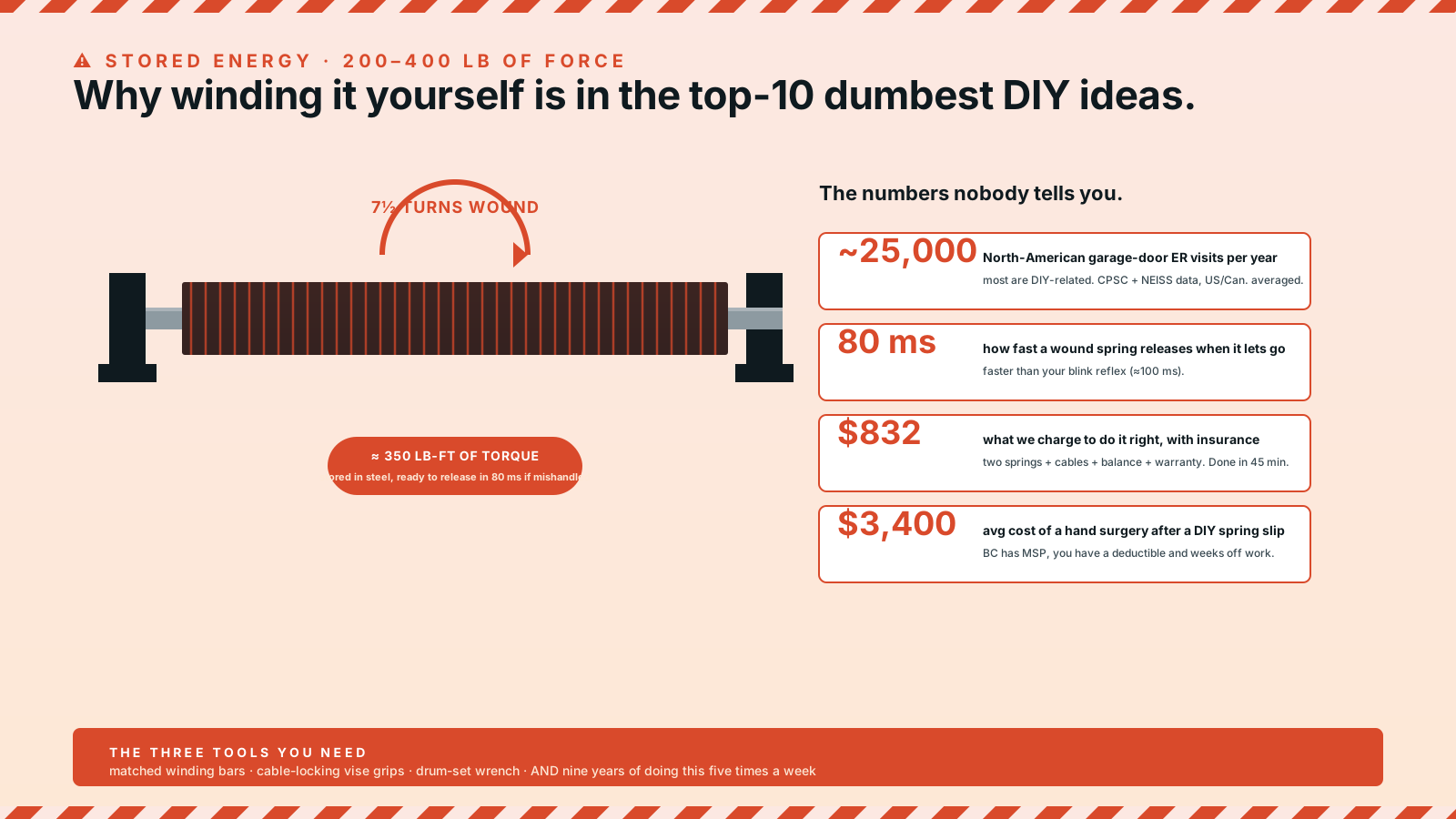
A standard residential torsion spring on a single-car door is wound to between 25 and 35 quarter-turns of pretension during installation. At full pretension, it stores roughly 200 to 400 foot-pounds of energy. That energy is held in place by the winding cones on either end, which are bolted to a steel shaft, which is anchored to the ceiling-mounted bracket above your door.
If any of those four restraint points fails — the cone setscrews slip, the bracket lets go, the shaft cracks, or the spring itself fractures — the released energy goes somewhere. Usually into whatever is closest, which is usually the person standing under the spring.
200 foot-pounds is about what a 200-pound man falling from 12 feet generates on impact. That's the energy you're standing next to. Now imagine releasing it through a one-inch contact point, in 80 milliseconds, with a piece of broken steel as the projectile. That's not a metaphor. That's the failure mode.
The numbers nobody quotes you
Before UL 325 and DASMA tightened standards in the 1990s, North American emergency rooms saw an estimated 20,000 to 30,000 garage-door related injuries per year. The majority were DIY spring work. Numbers have come down since, mostly because the proportion of homeowners doing it themselves has dropped — but the per-incident severity hasn't changed at all.
Common injuries from DIY torsion spring work, in roughly the order I've seen or heard about them in 17 years of trade:
- Broken fingers (winding bar slips, hand still on bar — most common)
- Lacerations to the forearm (broken spring fragment travels along the shaft)
- Wrist fractures (sudden release of pretension while wrenching the cone setscrews)
- Eye injuries (chips of steel or cone material at face height)
- Concussions (winding bar kicks out, strikes the head)
- Fatalities (rare, but the data is non-zero, mostly older homeowners on ladders)
None of these is a story I would tell to scare you. They are the boring statistical reality of putting your hands on a wound-up piece of high-carbon steel.
The tools you need that you don't have
1. Two winding bars, ½-inch hardened steel, 18 inches long.
Not rebar. Not a long screwdriver. Not a piece of dowel. The winding cone is designed for a specific bar diameter and bar length, and substituting anything else means the bar will slip out of the cone hole partway through a wind, which is when people get hurt. A proper set of winding bars is $40. Most homeowners try to use whatever's in the garage. That's the first cascade failure.
2. A torque-rated socket wrench with the correct millimetre socket for the cone setscrews.
The setscrews on the winding cone hold the wound spring in place. They are tightened to a spec — too loose and they slip under load, too tight and you strip the cone. You need a calibrated torque wrench, not a beaters-toolbox socket from Princess Auto.
3. Vise grips on the torsion shaft, opposite cones.
Before any cone is loosened, the shaft itself has to be locked so it cannot rotate. This requires a heavy vise grip clamped on the shaft and braced against a fixed structure — usually the ceiling joist. If the shaft can turn during your wind, the wind will not be even, and the door will be out of balance from minute one.
The tools you have that won't work
- A cordless drill. People try this. The torque ratings on cordless drills are not in the right range. They strip cone setscrews and lose grip mid-wind.
- A long screwdriver as a winding bar. The handle slips. The shaft is too short to give you mechanical advantage. The plastic handle deforms.
- A pipe wrench instead of vise grips. Doesn't grip evenly on round stock. Pipe wrenches mar the shaft, which then catches on bearings.
The math nobody does
People consider DIY because the parts cost $40 to $90 per spring. "Four hundred bucks for thirty minutes of work" is a real and reasonable thing to think. So let's do the actual math.
| Item | DIY cost | Hire-out cost |
|---|---|---|
| Springs (parts only) | $80-$160 | included |
| Winding bars (proper) | $40 | — |
| Cables (you'll need to replace these too) | $60-$120 | included |
| Sealed bearings (the right time to swap) | $40-$80 | included |
| Your time (3-5 hours first time) | $0-$300 | $0 |
| Workshop spec sheet, charts | ~$30 | — |
| 5-year parts warranty | None | Included |
| 2-year labour warranty | None | Included |
| Total | $250-$700 | Flat rate, all-in |
The realistic DIY cost, done correctly, is around $400 to $500. The hire-out is our flat all-in rate. The actual savings if you do everything right is a few hundred dollars at best. If anything goes wrong — a stripped setscrew, a snapped cable during install, a door that needs re-balancing — you've burned the savings and you still need to call.
And that's before you've added any value to the risk that you're putting on yourself. The deductible on a Vancouver hand-surgery claim isn't "insurance pays it." It's lost work, weeks of recovery, and an ER copay in a system that's already begging.
The very narrow window where DIY makes some sense
I'll be fair. If you're a millwright, a journeyman ironworker, a tower-crane operator, or you've replaced springs on industrial doors for a living — you know what you're doing and you don't need this article. The trades community knows its own.
Everyone else: there is no version of this that is worth a few hundred dollars in possible savings. If you're staring at a snapped spring in your driveway in Surrey at 6:30 a.m. and the impulse is to drive to Home Depot, please just call us instead. We will be there in 12 to 18 minutes. The door will be safe by lunch. You'll still have all your fingers.
The honest version
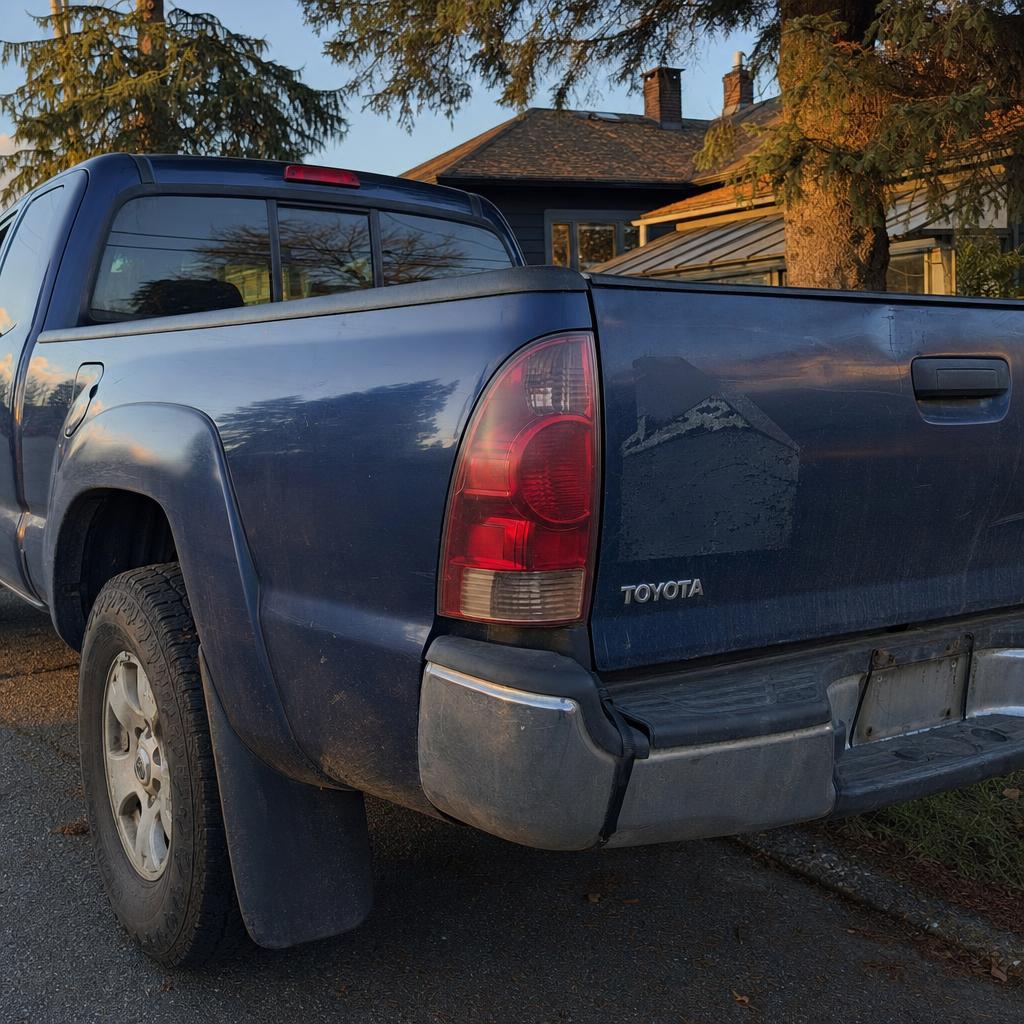
I drive a beat-up navy Toyota Tacoma full of winding bars, sealed bearings, and oil-tempered springs. I have done this thousands of times. I still respect the spring every single time I touch one. The day I stop respecting it is the day it teaches me something I don't want to learn.
The door doesn't lie. The spring doesn't either. Call before noon.