
The build-decade footprint
Most of Walnut Grove's tract subdivisions went up between the late 1980s and the late 1990s. A handful of production builders did most of the work, and their spec sheets looked alike: a Wayne Dalton 9100 with a TorqueMaster Original was the default fit, because it was cheaper and faster to install than conventional torsion. Nearly thirty years on, practically every one of those doors is on at least its second spring set.
The third set is the one we get called for. The first failure usually came 6 to 8 years in — covered by the installer's warranty or fixed cheaply. The second, around year 14 to 16, was on the homeowner, but Original parts were still around, so an in-kind swap made sense. The third failure — the one happening across Walnut Grove right now — runs straight into the discontinued-parts wall.
What the failure looks like
Most of our Walnut Grove calls follow the same script. The homeowner pulls into the driveway, the opener hums but the door barely lifts — or it lifts six inches and drops back down. The wall button does the same thing. Then they pull the release cord, try it by hand, and find it's about 60 pounds heavier than it should be.
What's happened: one spring inside the TorqueMaster tube has snapped. You can't see it; the tube looks exactly the way it always has. But the door has lost about half its counterbalance, and the opener is now doing lifting it was never designed for. Keep running it and the opener gear or the cables go next, turning a routine spring job into a $1,400 cascade.
Why we recommend converting on Walnut Grove homes
Three reasons specific to this neighbourhood.
First: parts. The original 9100s installed here through the '90s came with the TorqueMaster Original, which Wayne Dalton discontinued years ago. There is no like-for-like replacement spring. The only in-kind option is the TorqueMaster Plus retrofit kit, which costs more than a full standard-torsion conversion AND keeps you locked into proprietary parts for the next service.
Second: door condition. Most Walnut Grove 9100s are roughly 28 to 38 years old. The panels are usually still fine, but the cables, bottom brackets, and bearings are often original. When we convert to standard torsion, the shaft, springs, cables, drums, end bearing plates, and centre support are all new. You end up with a door whose entire counterbalance system is new, for less than the in-kind spring swap.
Third: future service. With standard torsion, your next spring (whenever it comes) is a $100 part any garage door shop in the Lower Mainland can install. With TorqueMaster — even the Plus — it's a special-order Wayne Dalton dealer part at $200–$250, every time.
The Brookswood / Murrayville exception
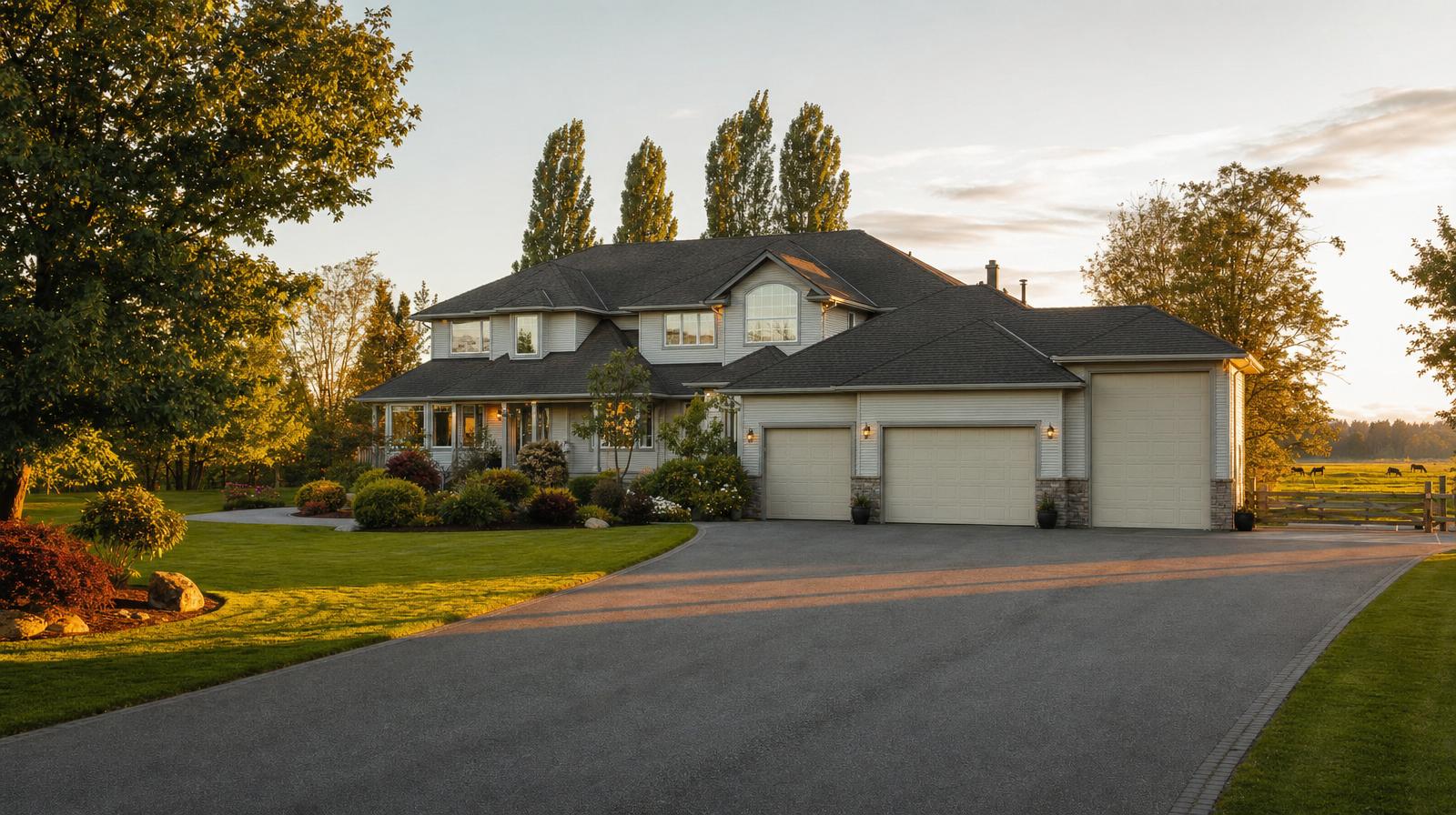
The bigger lots elsewhere in the Township are a different conversation. Brookswood, parts of Murrayville, the Salmon River Uplands acreages — more outbuildings, often more than one garage door per property. The shop door at the back of the lot is often 14 or 16 feet wide and needs heavier springs. Those usually weren't TorqueMaster systems; the doors were too heavy for it, so they got conventional torsion from day one.
If you're in Brookswood or Murrayville with a barn-style shop door and a snapped spring, you don't have the TorqueMaster problem. You have a normal replacement on a heavier spring — our flat-rate high-cycle tier for the pair.
If your door is still the original 9100
If your Walnut Grove home went up in the late '80s or '90s and still has its original Wayne Dalton 9100 with a TorqueMaster Original, you're well past the second-spring window — the third set is living on borrowed time. Converting to standard torsion is a flat-rate job (standard or high-cycle springs), and it saves you the next $250 special-order part, and the one after that.
The tech we send lives on the Langley side, usually about 18 minutes from your driveway. We've converted enough TorqueMasters in Walnut Grove that we can often guess your floor plan before you finish describing the door.