

This is the single most useful thing you can do for your garage door in 2026, and it costs zero dollars. No torque wrench. No YouTube degree. Just you, the red emergency-release cord, and one minute of your morning before you go sit in traffic on Highway 1.
The balance test tells you whether your door is in counterweight equilibrium with its springs. If it's balanced, it floats. If it isn't, it doesn't. That one piece of information predicts about 70% of the failure calls I run.
What you're actually testing
A residential garage door weighs between 130 and 250 pounds. The springs above the door are wound to counterbalance that weight almost exactly — so the opener motor only has to overcome friction and a few pounds of net load, not the whole door. When the springs are tuned correctly, you can lift the door with one hand. When they're not, the opener is doing work it wasn't designed to do, and something will break: the opener gear, the cables, or the spring itself. Usually in that order.
Most Burnaby and East Van doors I service are out of balance by 15 to 30 pounds before anyone notices, because the opener compensates silently. Until it doesn't.
The 60-second test
Step 1 — Close the door fully.
Use the wall button. Let it travel all the way down and stop on its own.
Step 2 — Pull the red emergency-release cord.
That's the dangling red handle on the opener carriage in the middle of the ceiling track. One firm pull down and back. You'll hear a click. The opener is now disconnected from the door — the trolley is free.
Step 3 — Lift the door by hand to about 3 feet.
Both hands on the bottom edge, lift smoothly. You're going about waist-high. Then let go. That's the whole test. Watch what happens in the next two seconds.
The four outcomes
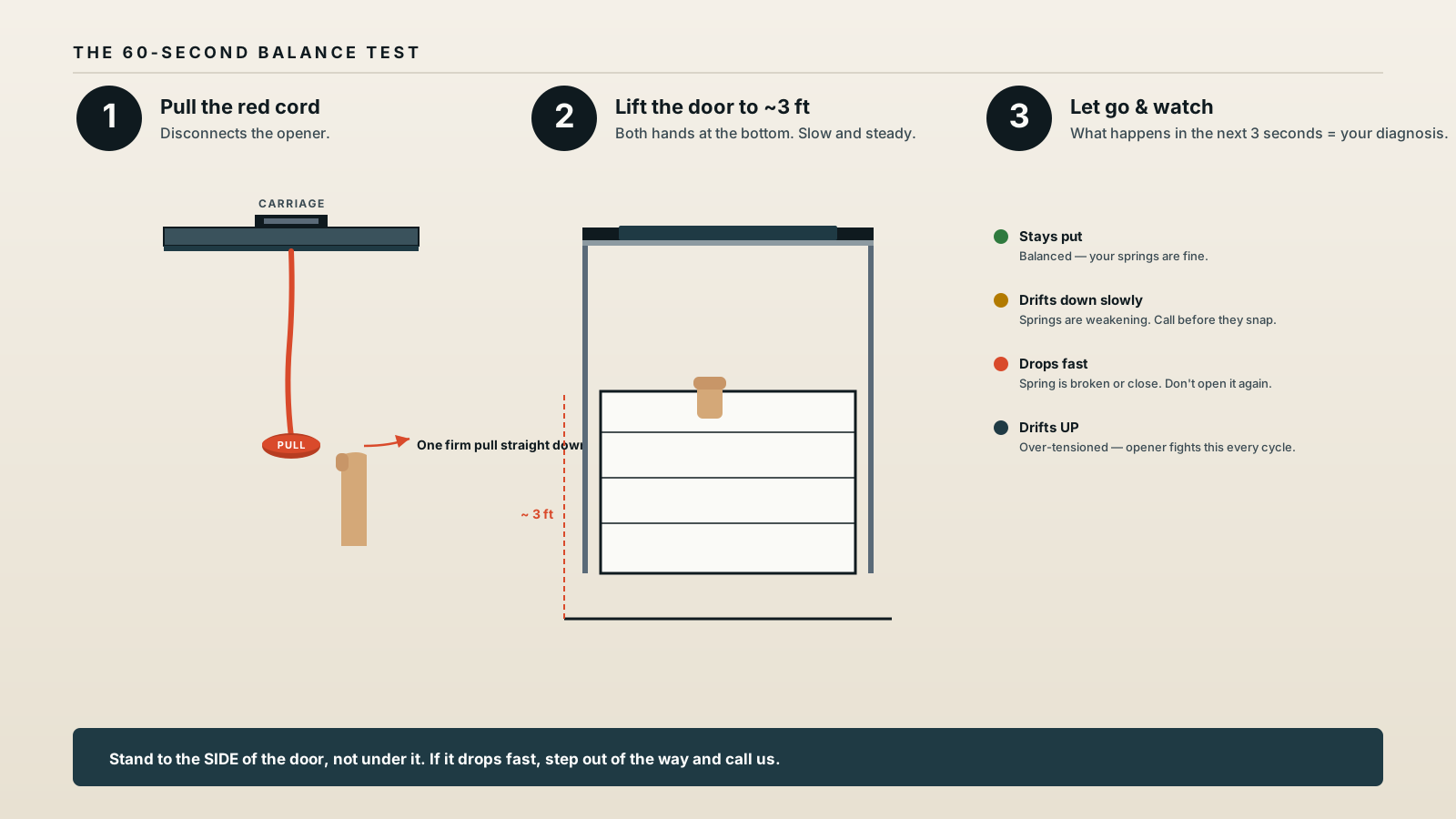
Outcome 1 — It stays put. (Healthy.)
The door floats at 3 feet. Doesn't creep up, doesn't sag down. This is what a properly balanced door does. Your springs are doing their job, your cables are even, and your opener is being treated with respect. Congratulations, you're in the 25% of Greater Vancouver garages that don't need me yet. Re-attach the trolley by lifting the door manually until it clicks back in, or hit the opener button and let it grab the carriage on the next travel.
Outcome 2 — It drifts down slowly. (Springs are tired.)
Drops two or three inches over five seconds. The springs are losing tension — either from age, cycle count, or a winding adjustment that drifted. The door will still function. The opener is doing 15 to 20 extra pounds of work on every cycle, which is why your opener gear sounds like it's working harder lately. You've got months, not years. Book a service when it's convenient. Not an emergency.
Outcome 3 — It drops fast or slams shut. (Spring broken or cable failed.)
If you let go and the door takes off downward — get out of the way. One spring has snapped, or a cable has let go, or both. Re-attach the opener carefully (the door is heavy now), leave the door closed, and call. Do not use the opener. The motor will try to lift 200 pounds against gravity and cook itself trying. That's the call I get every Tuesday morning from someone in Brentwood who didn't read this far.
Outcome 4 — It floats up on its own. (Overwound — also bad.)
Less common, but it happens after a DIY tension adjustment or a sloppy service call. The springs are wound too tight; the door is heavier on the opener's down-travel than its up-travel, and it'll start opening on its own when released. The opener will fight it. UL 325 auto-reverse can misfire. This needs adjustment, not replacement. Don't try to unwind it yourself.
Why this test matters more than ever
About 28,000 condos and townhouses got built in Greater Vancouver between 2008 and 2012 — the Olympic-era construction boom. Every one of those buildings put in builder-grade 10,000-cycle springs. We're in the year-of-failure window right now. If your townhouse was built between '08 and '12 and you've never had a spring touched, run this test today. The math says you're about due, and the math has been right about this for fifteen years.
| Door cycles/day | Years to 10,000 cycles |
|---|---|
| 2 (light use) | ~13 years |
| 4 (average household) | ~7 years |
| 6 (two-car family, daycare run) | ~4.5 years |
| 8+ (home-based business) | ~3.5 years |
The honest bit
I'd rather you do this test once a year and not call me, than not do it and call me on the worst Monday of your year. The opener motor in your ceiling cost $400. The springs above it are a flat-rate repair. The door panels behind it cost $2,300 to replace. The balance test is free. The door doesn't lie. Call before noon if it told you something you don't like.